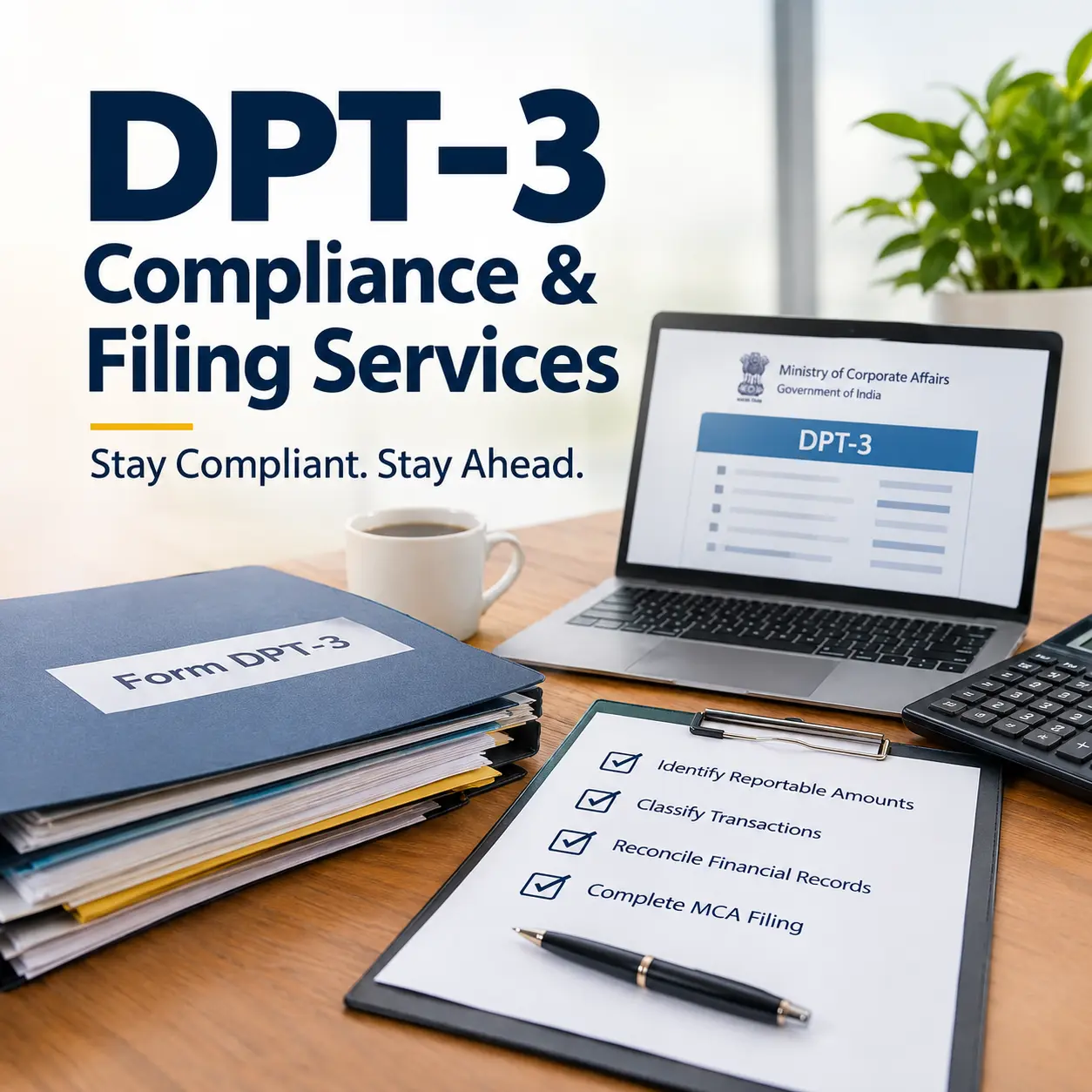
Form DPT-3 is an annual statutory filing under the Companies (Acceptance of Deposits) Rules, 2014. It requires companies to disclose deposits and certain outstanding amounts received by the company that are not considered deposits under the applicable provisions.
For accurate DPT-3 compliance, companies need to identify reportable amounts, classify transactions correctly, reconcile financial records, and complete the MCA filing within the prescribed timeline.
What is Form DPT-3?
Form DPT-3 is a statutory return prescribed under Rules 16 and 16A of the Companies (Acceptance of Deposits) Rules, 2014, framed under Section 73 of the Companies Act, 2013.
Its purpose is to provide the Ministry of Corporate Affairs (MCA) with information about a company’s deposits and certain financial transactions that are not considered deposits.
DPT-3 is not simply a summary of financial information. Companies need to carefully review their ledgers and determine whether each relevant receipt qualifies as a deposit or falls under the transactions not considered deposits.
Scope and Applicability of DPT-3
Except for Government companies and certain entities such as banking companies and NBFCs, applicable registered companies may be required to file Form DPT-3 based on their outstanding loans, receipts, or deposits.
The filing may cover:
- Return of Deposit
- Transactions not considered deposits under Rule 2(1)(c)
- Return of Deposit and transactions not considered deposits
- Details of outstanding money or loans received by the company but not considered deposits under Rule 2(1)(c)
Therefore, companies should assess their outstanding balances and the nature of their transactions before completing the DPT-3 filing.
Reportable Non-Deposit Transactions
Many companies file DPT-3 for transactions that fall under the exclusions provided in Rule 2(1)(c) of the Companies (Acceptance of Deposits) Rules, 2014.
Common examples include:
Loans from Directors and Relatives
Loans received from directors or their relatives may qualify as exempted transactions, subject to the prescribed conditions. The required written declaration regarding the source of funds should be obtained and maintained.
Inter-Corporate Deposits
Amounts received from another company or body corporate may fall under the applicable exclusion, subject to the conditions prescribed under the rules.
Bank and Financial Institution Borrowings
Loans, overdrafts, and credit facilities received from eligible banks and financial institutions may be treated as transactions not considered deposits.
Promoter Loans
Certain unsecured loans received from promoters may qualify for exclusion where they are received pursuant to conditions or stipulations imposed by lending institutions.
Customer Advances
Advances received against the supply of goods or services may qualify under the applicable exemption, subject to the prescribed conditions and timelines.
Share Application Money
Share application money pending allotment may also fall under the applicable provisions, provided the prescribed requirements relating to allotment or refund are satisfied.
Companies should maintain proper supporting documents for each transaction and verify the applicable conditions before reporting them in DPT-3.
DPT-3 Compliance Calendar
The annual DPT-3 filing considers the relevant outstanding amounts as of 31 March, and the prescribed filing due date is 30 June.
Companies should complete the review and reconciliation process before the deadline to avoid last-minute errors or delays.
Documents Required for DPT-3 Filing
The documents and information required may vary depending on the nature of the transactions. Common records include:
- CIN and company details
- Net worth, paid-up capital, free reserves, and securities premium
- Details of outstanding loans and receipts
- Opening balance, additions, repayments, and closing balance
- Director declarations, where applicable
- Loan and financial institution documents
- Statutory auditor certificate, where applicable
- Active DSC of the authorised director
Maintaining complete and accurate records makes the DPT-3 compliance process easier and helps support the information reported in the filing.
DPT-3 Filing Process
A simple compliance workflow involves:
- Identify outstanding balances as of 31 March.
- Obtain required declarations and supporting documents.
- Verify exemptions under Rule 2(1)(c).
- Reconcile opening balances, additions, repayments, and closing balances.
- Complete and submit the DPT-3 form through the MCA V3 portal with the required digital signatures.
Consequences of Delay or Non-Filing
Failure to comply with the prescribed DPT-3 filing requirements may result in additional MCA filing fees and other statutory consequences, depending on the nature of the non-compliance.
Incorrect classification of transactions can also create compliance risks. Therefore, companies should verify the nature of each outstanding amount and maintain appropriate supporting documentation before filing.
DPT-3 Compliance Support
At Senthil & Associates, Chennai, we assist companies with DPT-3 compliance, including transaction review, loan classification, director declarations, reconciliation, applicable certification, and MCA V3 filing.
Proper classification and timely filing can help companies maintain accurate statutory records and meet their annual MCA compliance requirements.